
What Does Your Clutter Say About You?
If we saw clutter differently, we could see our belongings differently

I’m very open about my beef with clutter.
I promised myself I wouldn’t write about it anymore, as everyone seems to love to declutter but me! But because I write to help remove the shame around how our homes look and how we live in them, I couldn’t not.
To be fair, clutter itself isn’t the real problem for me; it’s the negativity and confusion attached to it. I’m not sure everyone could agree on what ‘clutter’ really means, but we’ve been conditioned to believe that having it in your home is not a good thing, that you’re somehow failing.
So while the world continues its obsession with clutter, a billion-dollar industry continuing to target and shame women to sell us organisational systems we don’t need, I will continue dispelling the myth that decluttering is the answer to domestic bliss and a calm nervous system.

Last week I posted a note about a very, very popular interior influencer and his decluttering advice: The Cantaloupe Rule - home decor gospel / simple decluttering.
“Fewer larger things. Nothing smaller than a cantaloupe. If your home looks cluttered, this is why. Little objects generally read as clutter. Large objects read as more intentional. Cantaloupe-sized or bigger looks considered. But anything smaller turns into visual noise. If you love the small stuff, you can group it all on a tray so it reads as one thing.”
Below is his example of how to group small things. Please don’t laugh; I do think he was trying to help.


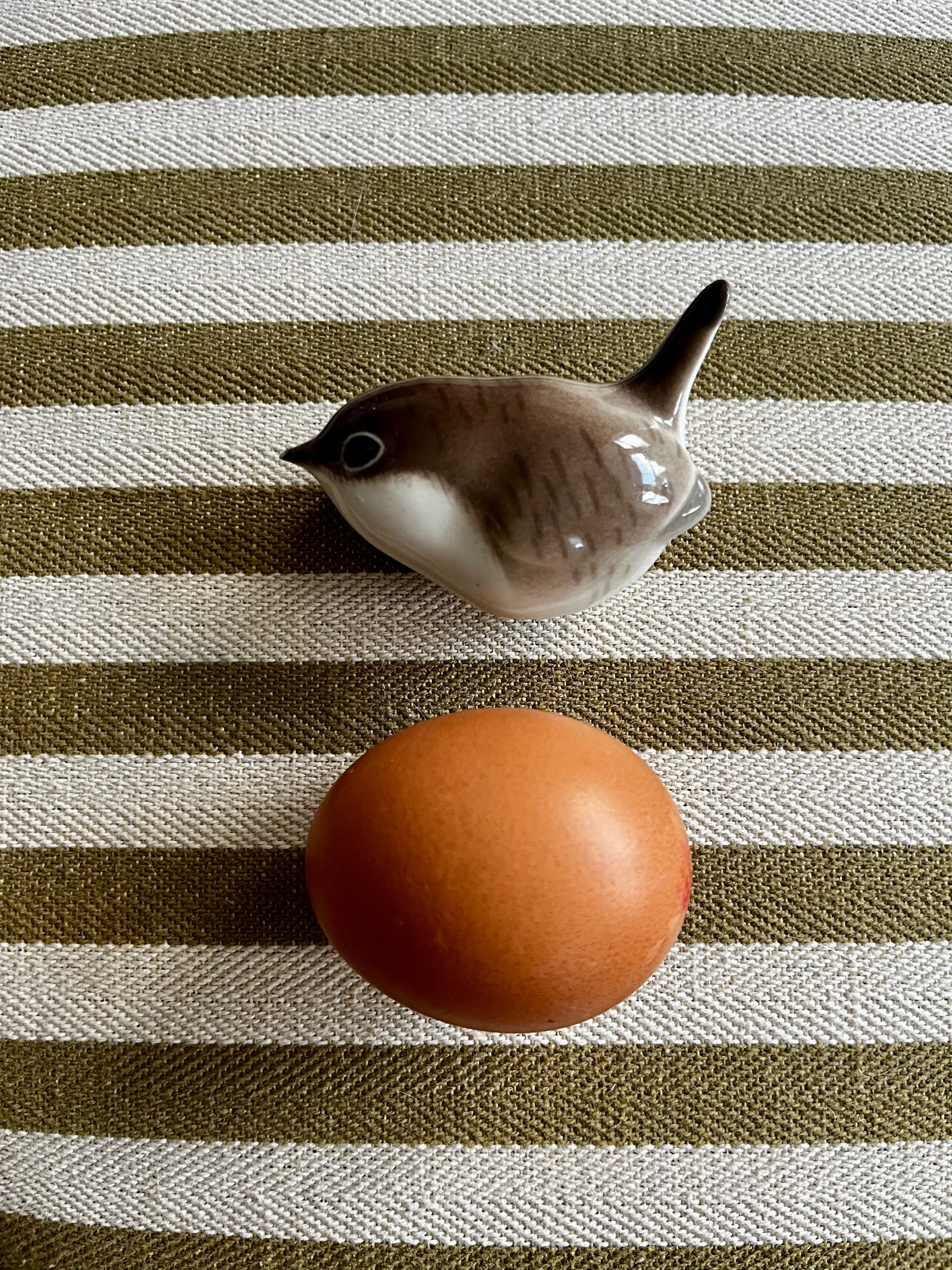
I looked around my home and thought if he ever popped in for a cup of tea, he’d be very disappointed. Some of my favourite things are the size; if we keep food as the context, an egg, and not even a large one.
I immediately commented:
“Is this rage bait?”
It then confirmed for me something that I’ve always thought: the word "clutter" is nonsense can mean something completely different to different people, as the image the v.v. popular influencer shared to prove his point that a cluttered home was bad; I thought looked lovely. See below:
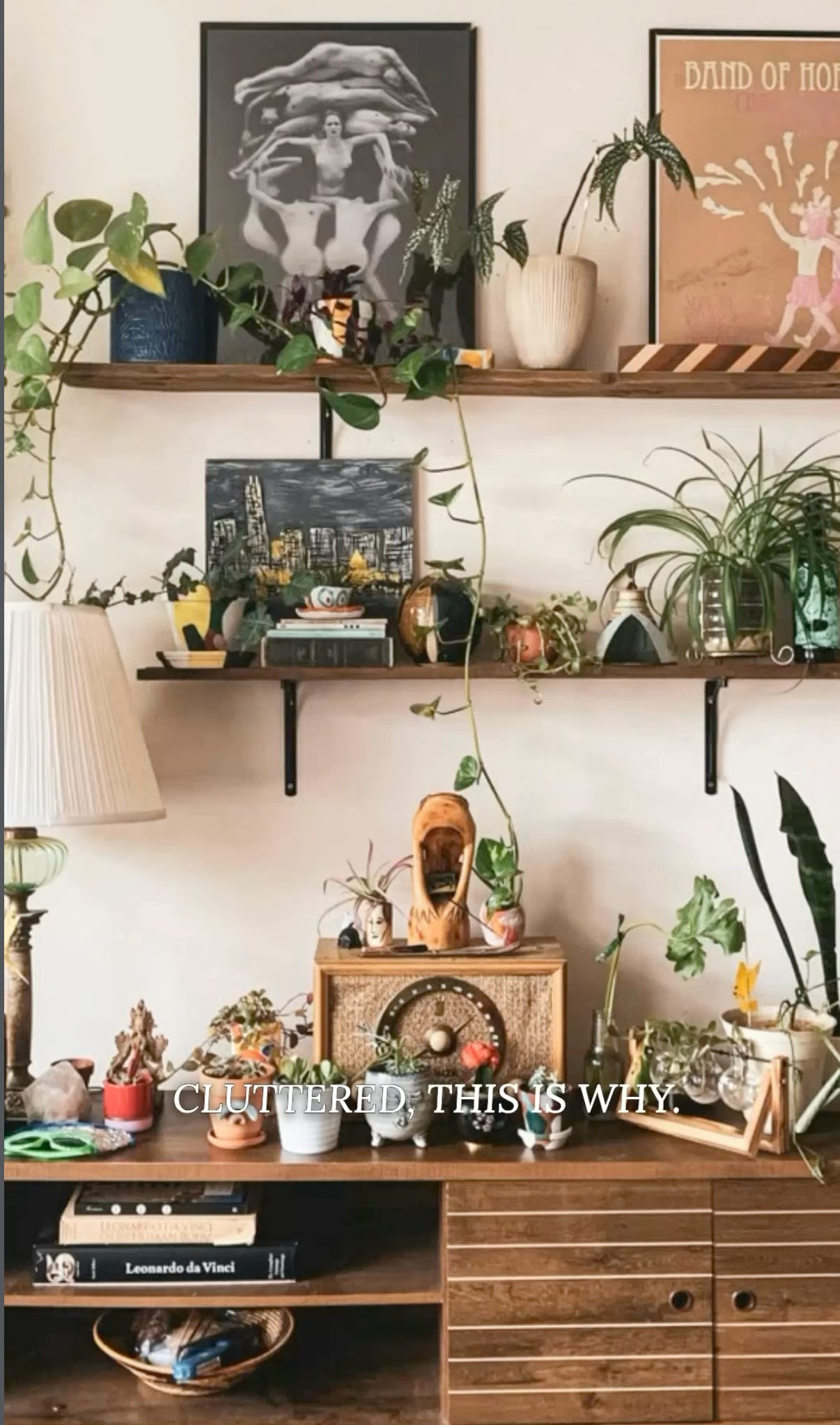
So what the hell is classed as clutter? I asked the ‘internet’ what clutter was. It took quite a few prompts to stop it telling me how bad clutter was, that it’s postponed decisions and could affect my mental health. I pushed harder for a neutral answer without any negative bias, and this is how it described clutter:
An accumulation of items that fills a physical space beyond its intended storage capacity.
It’s no wonder that this sparked a million-dollar industry. If that description alone doesn’t scream “you need more plastic storage containers,” I don’t know what does.
If we now look at the image of the ‘bad clutter’ above and ask whether they are postponed decisions, or are those small ornaments filling the shelves above their intended capacity? The answer is no. Everything looks intended and fits perfectly. The v. v popular influencer obviously just doesn’t like small ornaments, and that is fine, but don’t hate on the people who do.
Having items small or large on show because you love them is not clutter. You just like having your things around you.
Now we understand the true meaning of clutter is too much stuff to put away. There is only one true answer to solve it- cut clutter off at the source and don’t buy more than you need. Simple. The problem really isn’t clutter; it’s overconsumption.
Cut clutter off at the source and don’t buy more than you need
It’s been sixteen years since Marie Kondo’s first decluttering book was released, and things haven’t changed that much, which makes me wonder if decluttering even works. Rather than encourage us to buy less, the industry continues to confuse and shame us into thinking that our homes should be cleaner than humanly possible, and that having belongings is bad unless they are organised away and labelled. This isn’t inner peace; this is pressure.
I try to manage my home as simply as possible, and if I don’t have time to clean or tidy because I have something far more fun to do, I do it guilt-free. There is way more to life than a tidy home.
I get sad when I hear anyone say they are embarrassed of their home. Feeling ashamed and judged into thinking how they live is wrong. We all deserve to love our home, and everything we own, however that looks for you. Because believe me, there is someone out there who would love to live in your messy home surrounded by your cluttered belongings.
Own how you live. If you love a clearer home with large ornaments, I love that for you. But the point is to never feel bad for having what you love in your home, big or small, organised or running wild, and never shame someone else for living in their home differently to you. It really is none of anyone’s business how we choose to live.
I love a reframe. What if we thought of clutter completely differently? Not as piles of shoes, not unhung coats, not random chargers, but something more positive.
If we saw everything we own as a visual autobiography, every object as evidence of the life we’ve lived, we would view our belongings completely differently. They wouldn’t be clutter; they would be little glimpses of us.
What if the question “What does your clutter say about you?” was asked more curiously? The answers could be lovely.
We could share our idiosyncrasies through our things, letting them tell the unedited version of our history, our passions and what comforts us. The insight into why you love boats, or where the tiny collection of shells came from or why you have blue ducks on your fireplace.


It might also help reduce what we bring into our homes. Every time we’re tempted to buy something, we can ask: Does this share something about who I am or someone else’s identity? The answers will help separate a genuine purchase from an influenced one.
Your home should share your story, not someone else’s.
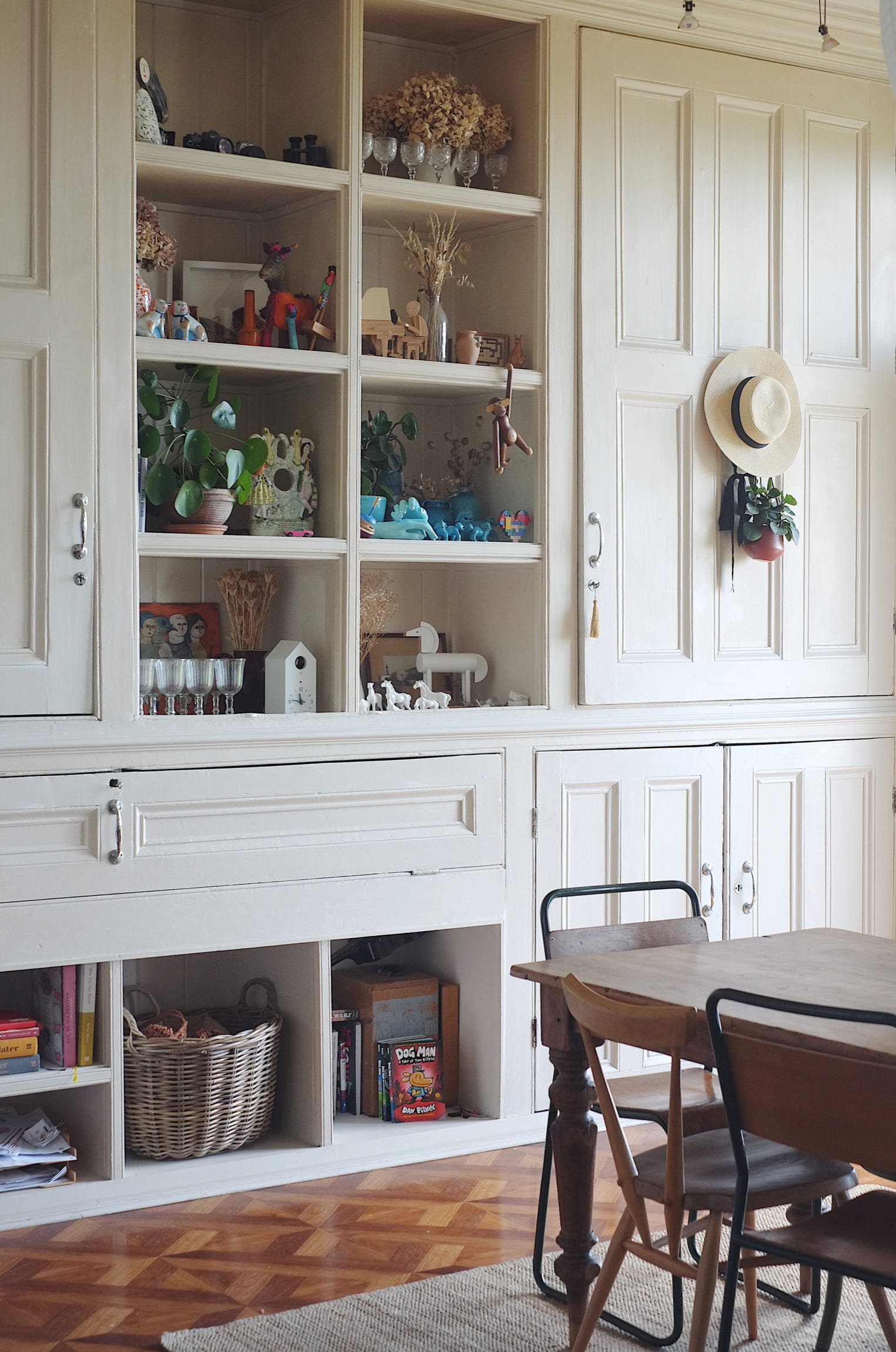
Be proud of your stack of cookery books. The mountain of papers and tubs of paint brushes. The weird ornaments, messy desks and cupboards; be proud of all of your clutter.
I love my clutter. Admittedly, it took me a while to get here and embrace my visual autobiography, because I was conditioned to think it was bad. Giving away gifts, whether I liked them or not, because they didn’t fit my scandi minimalist vibe. Hiding kids’ artwork because they were messy or purging belongings frequently, so that I needed to rebuy what I’d chucked away.
When I started to see clutter as evidence of my life and my family's, and not a mess or a problem, things changed. I am now proud of my clutter. The bowl of lip balms, earrings, keys, glasses, sunglasses. Piles of current and favourite reads, half-made Lego, hair clips, headphones and my collection of birds the size of eggs.
If this is clutter, I am happy. It reminds me that I am a human, present in my messy, happy, sometimes difficult life. I refuse to be shamed into hiding it.
Feeling bad about our homes is so unproductive and unnecessary. Take joy in the chaos our lives bring and never, ever apologise for it or worry about the standard someone else has set for your home.
What does your clutter say about you? That you love gardening, vintage handbags, coins, crocheting, postcards…
And next time you’re thinking of buying something for your home, be curious about what it will share about you.
Thank you for reading!
Claire x
P.S
If you find managing your home too overwhelming or you buy excessively, please reach out and ask for support. Yes, decluttering might help postpone those horrible feelings for a short period, but believe me, they will be back and you don’t deserve to feel that way.
I’d be so happy if you tapped the little ♥️, left a comment, or shared it with someone who might like it too. And don’t forget to subscribe if you haven’t already, so you don’t miss future posts.
If you purchase a Founding subscription for £100, you receive a complimentary one-hour Zoom call to discuss your home. I like to think of myself as a gentle hand on your shoulder, guiding you. You’ll leave with helpful, honest feedback and a clearer sense of how to create a home for you.
For sure one person's clutter is another person's treasured collection! But not putting things back into their allotted place drives me mad... Of course, I never do this 😂 only my husband 😂😂
You should know I have spent many years trying to figure this out too. I just gave away 18 stuffed animals my kids don't play with to a kindergarten. There still are 23 or more left to overcrowd our bed... almost impossible to keep organized 🙈😜 What's worse is I only bought about 25% of it myself. The large majority were the ones my mother kept from my childhood... I was so relieved when they were off on their way to that kindergarten...!
Anyway, what I want to say is: Feng Shui (and decluttering) is Asian philosophy. It is wrong to sell decluttering without the underlying philosophy.
From Iran to Japan cleaning is not seen as annoying work, as something only dumb people should do for a job. Everyone does it. Even the men.
It is seen as making your surroundings ready for life. You clean to be able to focus properly on what is important. You declutter to train one skill: knowing what is important in your life. You organize to be able to start your day.
I am not sure I explained it properly, so if you have any questions, just answer to the comment 😅